
How Dispatch & Load Management Software Reduces Empty Miles and Boosts Fleet Profitability
Dispatch and load management software cuts empty miles primarily by automating backhaul sourcing, matching return loads to a truck's location and hours of service before it finishes its outbound delivery.

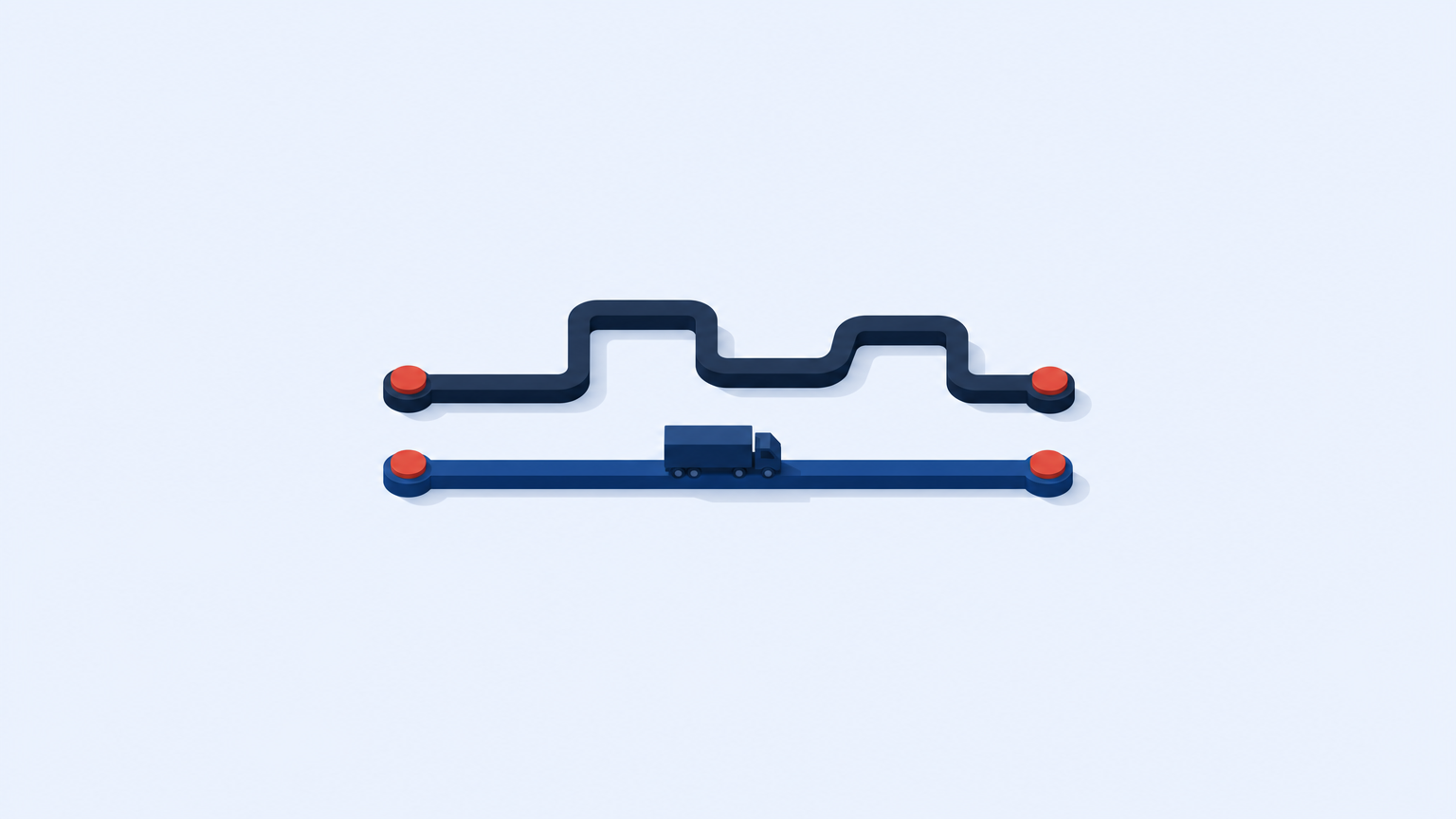
Every fleet has a number they don't like looking at too closely: the percentage of miles their trucks run empty. Industry data consistently puts that figure somewhere between 16% and 25% of total miles driven, depending on the source and the segment. Sit with that for a second. A quarter of your fleet's driving, in some cases, generates zero revenue while still burning fuel, wearing down equipment, and paying a driver. That's not a rounding error. That's a structural leak most fleets are managing by instinct instead of by system.
Quick answer: Dispatch and load management software cuts empty miles primarily by automating backhaul sourcing, matching return loads to a truck's location and hours of service before it finishes its outbound delivery, instead of leaving a driver to call in empty and scramble. Fleets using this kind of load optimization commonly report 15 to 25% fewer empty miles and measurable gains in load margin. The dollar impact scales directly with fleet size and average lane length.
Why Empty Miles Are So Expensive
An empty mile costs almost exactly what a loaded one does, fuel, driver time, maintenance wear, insurance exposure, minus the part that actually pays for all of it. That's what makes deadhead such a quiet drain on margin. Nobody feels one empty mile. What they feel, eventually, is a fleet running at 75% or 80% utilization instead of 90%+, without ever being able to point to the exact moment it happened.
Run the math on a mid-size operation and it adds up fast. A carrier running 500,000 annual miles at roughly 23% deadhead is putting well over 100,000 empty miles on the road a year, each one costing real variable cost with nothing coming back. Scale that to a fleet running hundreds of trucks and you're talking six figures in pure waste, every year, hiding inside a number most fleets aren't even tracking by lane.
How the Software Actually Fixes It
Backhaul sourcing before the truck goes empty. This is the core mechanism. Instead of waiting for a driver to finish delivery and call in with nothing lined up, the system starts scanning for return freight near the drop-off point while the truck is still en route, checking rate, broker reliability, and pickup timing against the delivery deadline. By the time the driver's unloading, there's already a candidate load waiting.
Load matching based on live location and hours of service. A dispatcher working from memory and a whiteboard can't realistically track where every truck will be in six hours, let alone whether the driver has the hours left to run a return load legally. Software pulling live ELD and location data knows both, instantly, and can rule out loads that look good on paper but aren't actually legal for that driver at that moment.
Profitability scoring, not just load matching. Finding any return load isn't the goal, finding one worth taking is. Better platforms score candidate backhauls by rate per mile, deadhead-to-pickup distance, and delivery deadline, so dispatch isn't just filling trucks, it's filling them with freight that actually moves the needle on margin.
Regional load grouping. Grouping freight by region instead of booking loads one at a time reduces unnecessary repositioning between pickups, which cuts into the same deadhead number from a different angle: fewer miles spent getting into position for the next load in the first place.
Visibility into the number itself. A lot of fleets are running high deadhead simply because nobody's watching the metric by lane. Software that surfaces deadhead percentage per truck, per lane, per driver turns an invisible leak into something dispatch can actually manage and improve week over week.
Watched your deadhead number move after switching systems?
The before-and-after numbers from an actual fleet mean more than another vendor's case study. Tell other fleet managers what your empty-mile percentage looked like before and after, and what it took to get there.
What This Actually Looks Like in Practice
Picture a driver who's an hour out from delivery. In a reactive shop, that driver finishes unloading, calls dispatch, and dispatch starts working the phones and load boards from scratch, which can easily burn hours before anything's booked, hours the truck sits empty and idle. In a shop running proper load management software, the backhaul search started the moment the delivery was confirmed on the calendar. The driver pulls out of the dock and heads straight into the next pickup instead of parking to wait.
That gap, the time between "empty" and "loaded again," is where most deadhead actually lives. It's not usually one catastrophic routing failure. It's death by a thousand small delays, repeated across every truck, every week.
Compare dispatch and load management platforms on the Dispatch Services & Software category.
FAQ
What counts as an empty mile in trucking?
An empty mile, also called deadhead, is any mile driven by a truck without freight in the trailer. It includes repositioning between loads and driving back after a delivery with no return load booked.
How much can dispatch software actually reduce empty miles?
Fleets using load optimization software commonly report 15 to 25% fewer empty miles, though the exact figure depends heavily on how reactive the fleet's current process is. A fleet already doing disciplined backhaul planning by hand has less room to improve than one still working reactively off phone calls.
Is reducing empty miles really worth the cost of new software?
For fleets running enough volume to have real backhaul options, generally yes. The math is straightforward: even a modest deadhead reduction on a fleet running meaningful annual mileage recovers real revenue, often enough on its own to cover the software cost multiple times over.
Can a small fleet reduce empty miles without dedicated software?
To some extent, yes, through disciplined manual backhaul planning and load board diligence. But the advantage of software is speed: it starts the search the moment a delivery is confirmed, not after the truck is already empty, which is where most of the savings actually come from.
Does reducing empty miles help with anything besides cost?
Yes. Fewer empty miles means better asset utilization, less unpredictable driver scheduling, and lower fuel consumption and emissions per ton-mile shipped, which matters for fleets tracking sustainability metrics alongside cost.